

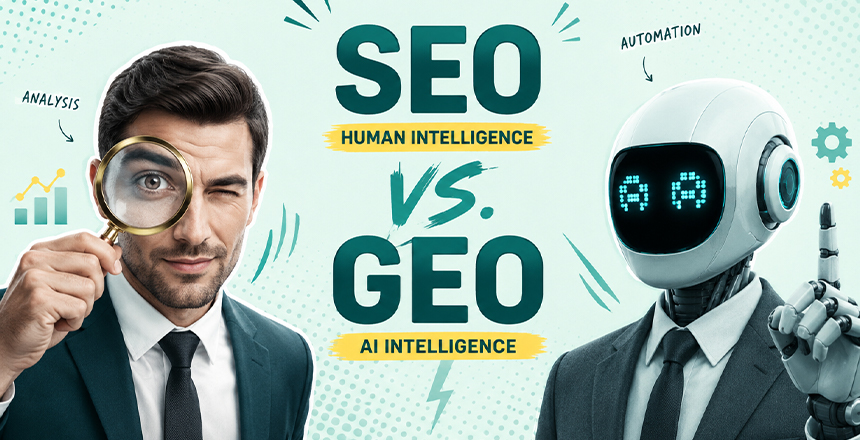
The debate about geo vs seo is kind of getting to be one of the major things in digital marketing lately. A lot of businesses aren’t just chasing search engine rankings anymore, because the internet is moving super fast. With AI powered search experiences, chat-like platforms, and generative engines in the mix, people are finding information online in a different way. So yeah, figuring out what the real difference is between SEO and GEO matters a lot now for brands, marketers, and business owners.
For years SEO helped businesses get visibility on search engines, but now GEO is going into a new direction of digital marketing. Lots of people still don’t really grasp what does geo mean, and because of that, they often mix up GEO with local SEO or with geographical targeting. Honestly it’s pretty common. In real terms though, GEO stands for Generative Engine Optimization , and it is about optimizing your content so it works well with AI driven answer engines and generative search platforms.
The comparison between seo vs geo is not about replacing one strategy with another. Instead, it is about understanding how both methods work together in today’s evolving digital ecosystem.
What Does GEO Mean in Digital Marketing?
To properly understand geo vs seo, businesses first need to know what does geo mean in the world of online marketing. GEO stands for Generative Engine Optimization. It is a more modern kind of optimization play, made for AI powered search systems that tend to give a direct answer to the user, instead of just serving website links.
Traditional search engines work in a different way, generally they show a list of webpages after you type in a query, like a straight result feed. GEO platforms though use artificial intelligence to examine the material and craft a concise answer right away, almost instantly. That kind of change is quietly reshaping how content marketing gets built, and also how online visibility plays out, in practice.
Nowadays, a lot of users go for asking detailed questions, instead of just typing a few short keywords. AI systems then dig into context, the actual meaning, who seems credible and how relevant it is, before they even show an answer. So, in a sense businesses have to craft content that feels informational, trustworthy, conversational yet also simple, for AI engines to parse and understand.
This is where geo marketing becomes highly important for modern businesses looking to stay visible online.
Understanding Traditional SEO
Before comparing seo vs geo, it helps to get a grasp on what seo actually does. SEO, or Search Engine Optimization, is basically the method of boosting a website’s presence on search engines, like Google . The whole point of SEO is to get web pages ranking up higher in search results and bring more natural visitors, through organic traffic .
SEO involves quite a few pieces that kinda matter in the bigger picture, like keyword optimization, backlink building, and technical SEO , plus website speed , mobile optimization, user experience and the actual content quality. Most businesses end up spending a lot on SEO because top placements generally bring more visits, interest, and eventually conversions . It’s a bit like, if your site is found more often, then it gets the opportunity to convert better.
For many years, SEO kind of stayed as the backbone of digital marketing. Still, even now SEO continues to show up as a major deal for online visibility. But lately the boom of AI driven platforms has created both new kinds of challenges and openings, so the whole geo vs seo discussion is getting more and more relevant, kinda fast, you know.
GEO vs SEO: The Main Difference
The biggest difference between geo and seo is kinda in the way content gets noticed, and then how it is delivered to people. SEO mainly tries to get a website to show up in search engine results, like that, while GEO is more about making sure the content ends up in those ai generated answers, yes in the response flow.
With SEO, people usually type keywords, scan through lots of links , and then open websites to grab the information they want. GEO is sort of different though, because the AI systems often answer straight away, so users don’t really need to click through multiple web pages.
Another key difference in seo vs geo is content structure. SEO content often focuses heavily on keyword placement and ranking signals. GEO content focuses more on semantic relevance, conversational language, topic authority, and contextual clarity.
Why GEO Marketing Is Growing Rapidly
The rise of AI platforms has, like, increased the importance of geo marketing across almost every industry. Businesses now are getting that people are interacting with AI tools for recommendations, product research, customer support and informational searches, not just “normal” browsing. So basically the whole map side matters more than it used to.
AI-driven systems tend to want content that is kind of direct, detailed, and reliable, not just stuff that sounds good. So businesses can’t just lean on keyword stuffing or basic optimization anymore, you know? Modern digital marketing really asks for deeper, more meaningful material , and not the usual surface-level stuff.
The growth of geo marketing is also sort of tied to changing consumer behavior, like people want instant answers instead of doing the whole scroll through multiple webpages. With AI-powered platforms, it gets easier because they deliver summed up and conversational responses, rather than making you search around.
As AI search continues evolving, companies investing in GEO strategies are likely to gain stronger online visibility in the future.
The Role of Content in GEO SEO
Content quality kind of plays a huge role in geo seo strategies, you know. AI systems tend to prioritize the content that shows real expertise, builds trust, and stays relevant, for sure. If the writing is weak or just stuffed with repetitive keywords, even if it looks “optimized”, it tends to do really badly in AI-driven environments.
Businesses now need content that explains topics clearly, answers real user questions, and provides complete information. Long-form guides, FAQs, expert articles, and conversational writing styles are becoming more valuable.
One of the strongest advantages of geo seo is like how it hones in on user intent. AI engines are basically checking if the content actually helps with a user problem, not just throwing keyword matches around. So because of that, brands have to be more serious about crafting helpful and human-centered content, even if it feels a bit slower at first .
Another important factor in geo SEO is structured information, like there’s this whole AI thing that sort of reads the page more calmly, when content is properly arranged. You know, using headings, plus contextual explanations, and then logical formatting, it helps these systems understand what’s really going on, a lot better.
SEO vs GEO: Which One Is Better?
A lot of businesses ask if SEO or GEO is better ,but honestly the situation is kinda mixed, because both matter. The whole chat about seo vs geo shouldn’t be looked at like it’s a rivalry. It’s more like both tactics play together, so you get stronger digital visibility overall, step by step, in practice.
SEO still feels essential for pulling in organic visitors via search engines, even now. Every day, millions of people keep checking the usual search pages like normal. At the same time, GEO is getting more and more important, because these AI-crafted search experiences are growing so fast.
Businesses that combine SEO along with GEO approaches will generally end up with a more robust online presence, than companies that just lean on one lane at a time. In a sense SEO nudges the site to rank higher, and GEO makes it so the content can surface inside AI generated answers , like it was placed there on purpose.
How GEO Marketing Is Changing Digital Strategy
The impact of geo marketing is already kinda visible across content creation, branding and online visibility strategies, it’s like a shift happening. Businesses are now optimizing their websites not only for search engines but also for AI comprehension, which makes sense I guess.
Brands are focusing more on authority building, trust signals, conversational content, and topical expertise. AI systems prefer sources that consistently provide reliable information.
Another major shift in geo marketing is personalization. AI-driven platforms analyze user behavior, preferences, location, and search intent before generating responses. This creates more targeted and personalized search experiences for users.
The Future of GEO vs SEO
The future of geo vs seo will shape the next generation of online marketing. SEO will continue to remain important because search engines are still a major source of traffic and discovery. However, GEO will become increasingly valuable as AI-generated search experiences continue growing.
Businesses that ignore GEO may struggle to remain visible in future AI ecosystems. On the other hand, companies that combine traditional SEO with GEO strategies will have a major advantage in digital visibility.
Understanding what does geo mean today can help businesses prepare for tomorrow’s online environment. GEO is not replacing SEO; it is expanding the way content gets discovered online.
For a lot of modern businesses, the best kind plan is to blend SEO together with GEO, in a sort of unified, but not too rigid digital marketing push. Done right, this combo helps with better search positions , stronger AI visibility, deeper brand credibility and also more durable online momentum. It’s like you are playing both sides of the attention game, and hoping the results stack over time, not just once.
Conclusion
The talk about geo vs seo sort of shows how digital marketing is changing with artificial intelligence . SEO laid down the basics for online visibility, but GEO is now shaping what’s next in AI-driven discovery , like a sort of different map almost.
Figuring out seo vs geo is basically important now for companies that aim for long term growth in the digital space. SEO tends to be about search rankings and visit volume, but GEO is more about AI generated visibility, also sort of conversational discovery.
As technology keeps evolving, the role of geo marketing and geo seo will matter even more later on, honestly. Businesses that adjust earlier, like sooner than everyone else, will end up with a stronger edge in the future landscape of online promotion, and that seems pretty clear.