

Today, almost every business, service, and platform is tied to websites or applications. Like online shopping and food delivery apps, social media and banking websites too everything depends on web development, at least in some part. But once someone begins learning web development, a usual question always pops up, what is the real difference between frontend and backend? Most beginners hear these terms pretty often but they still don’t really grasp how both parts work together, and why it matters.
If you are also confused about what is front end and back end, then the answer is, like, actually quite simple. The front end is the section of a website that people can see and touch directly, while the back end is the whole system working behind the scenes that handles data , servers , and site functionality. Both are equally important , because without frontend users can’t really interact with a website, and without backend the website would just not work properly.
Modern web sites are getting more advanced every year, so demand for frontend and backend developers is rising rather fast. Companies now expect pages that load quickly, look good, stay secure, and feel simple to use. That is also why frontend work and backend work both matter a lot, like one without the other.
Understanding Frontend Development
Frontend development is kind of mostly about the showy side of a website, you know. Like, everything people can see on their screen, is considered part of frontend work. So when you open a website and you notice the look, the pictures, the menu structure, those buttons and sliders, the tones and the fonts, and even the little animations, well, that whole vibe is put together by frontend developers.
The main purpose of frontend development is to make the whole experience a bit nicer, you know, for real humans. A website shouldn’t just look good, it also has to behave smoothly on every device. Like if someone lands on the page and it feels hard to use or slow, or maybe even kinda confusing, they often bounce out pretty fast, sometimes within seconds. So, for that reason, frontend developers tend to put a lot of effort into building tidy, responsive, and more human-friendly interfaces.
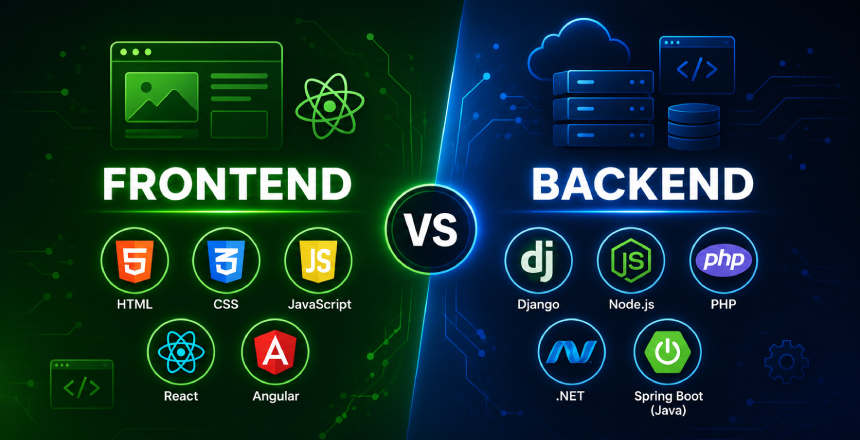
For building the frontend part of a website, developers usually end up using a few different technologies. HTML is there to create the rough framework of web pages, CSS handles the visual polishing and arrangement of elements, and JavaScript comes in to make things feel alive, like sliders, popups, animations, and other shifting content. In practice, these tools often work together even if each one has a different role, so the overall user experience looks smooth and responds fast.
Nowadays, companies also use modern frameworks and libraries like React, Angular, and Vue.js to create powerful web applications. These technologies help developers create faster and smoother user experiences.
When people search for front end and back end, they often think frontend only means website design,like “make it look good” or whatever. But frontend development is far more than just design. It also folds in responsiveness, performance tuning, accessibility stuff,and those little user interactions that make things feel smooth.
Understanding Backend Development
Backend development kind of works totally differently than frontend development, because the backend is like the part of a website that users do not really see. Its the hidden layer, it does the server side stuff, and somehow controls how the website runs “under the hood”. In other words it manages internal operations, and decides how the whole site behaves internally, not just what people view on the screen.
For example , when you create an account on a website, and you type your login details, the frontend sends your info over to the backend server, maybe quickly. Then the backend verifies whether everything is right by reaching out to the database. Once it’s confirmed, it grants you the ability to access your account, like opening the door. This whole process goes on in just seconds, but people usually only notice the final outcome on their screen, not the backstage steps.
Backend developers are responsible for handling databases, servers, APIs, website security, user authentication, and application logic. Without backend systems, websites would not be able to store user data or process requests properly.
Many powerful programming languages are used for backend development, you know the whole server side thing. Some of the most popular frontend and backend languages that people actually use in the industry include Python, PHP, Java, Node.js, Ruby , and C#. Also, databases like MySQL, MongoDB, and PostgreSQL matter a lot because they help websites store, and manage information in a safer way.
A strong backend is extremely important for website performance and security. If the backend is weak or poorly optimized, websites may become slow, crash frequently, or even face security issues.
Main Difference Between Frontend and Backend
The biggest difference between frontend and backend is that frontend kinda focuses on what users see, while backend is more like how the website works internally. Frontend development is really about user experience, design, layout, and interaction (it’s like the front part people touch). Backend development, on the other side, is about servers, databases, security, and website functionality, it’s the behind the scenes stuff.
Frontend developers mainly work with visual elements and interactive features. Backend developers work with servers and data management systems. Frontend is directly visible to users, but backend operations happen in the background.
Another big difference is the technologies that get picked in each case. There are various frontend and backend languages, and they often change with what the project really needs, so it can be kind of slippery. Frontend technologies mostly exist to craft nice user interfaces, like a better looking path for people, while backend technologies are more about logic building and server communication, in a more quiet way.
If you want one sort of easy way to understand front end and back end, compare it to a restaurant , kind of. The front end is like the dining area where customers settle in, scan the menu, and then place those orders. Meanwhile the back end is like the kitchen where chefs put everything together and handle the behind the scenes stuff. The customers only notice the final meal , but the real processing actually happens back there in the kitchen.
Both frontend and backend are connected closely. If the frontend is beautiful but the backend is weak, the website may not function properly. Similarly, if the backend is powerful but the frontend looks outdated or confusing, users may not enjoy using the website.
Frontend and Backend Languages
There are many popular frontend and backend languages used by developers today. In frontend development, HTML, CSS, and JavaScript are the most important technologies. These help developers create responsive and interactive websites.
Front-end developers also use frameworks like React, Angular, and Vue.js because they make development faster and more efficient.
In backend development, programming languages like Python, PHP, Java, Ruby, and Node.js are widely used. These languages help developers create strong server-side systems and manage application logic.
Choosing the right technologies depends on the type of project being developed. Some companies prefer Python because it is simple and powerful, while others choose Node.js because of its speed and performance.
Which is Better — Frontend or Backend?
Many beginners who learn about the difference between frontend and backend often ask which field is better. The answer depends completely on personal interest and career goals.
If you like creativity, website layouts, colors, little animations, and the overall user experience, then frontend development might be the right path for you. Frontend is sort of perfect for people who enjoy visual work and interactive design, in a very direct and hands on way.
On the other hand, if you kinda enjoy writing code logic, databases, servers, and the whole problem solving thing, backend development might fit you better. Usually, backend developers spend more time with functionality and technical systems, rather than everything user-facing. It can feel more like reasoning and less like layout, and that is why some people prefer it.
There is also another career option, called full-stack development, which is not so simple but kinda broad. Full-stack developers understand both frontend tech and backend tech. Because they can manage these two sides of development , companies really put a high value on those skills , since they can connect everything in one go, sometimes even faster.
Conclusion
Understanding the difference between frontend and backend is, like, super important for anyone who is curious about web development. They do play kind of different roles, but they’re still equally necessary for building a successful website or app. Without the frontend you won’t really see anything, and without the backend, well nothing really gets done behind the scenes, not in a reliable way.
Frontend development is mostly about the visual experience people bump into every day, while backend development deals with the server, database, and those internal website operations that quietly run in the back. If you remove the front end, the pages tend to look plain , and also feel awkward to use. And if there is no backend then, the website simply can't work right, it stops being functional.
As technology keeps growing , the demand for people who do frontend and backend work is rising fast across the globe. Companies really want websites that are quick, protected, responsive and easy to use. So, figuring out what is the front end and back end, even a little, can open a bunch of career doors for students , and for professionals as well.
Whether you choose frontend, backend, or full-stack development, gaining knowledge of modern frontend and backend languages can help you build a strong future in the tech industry.