

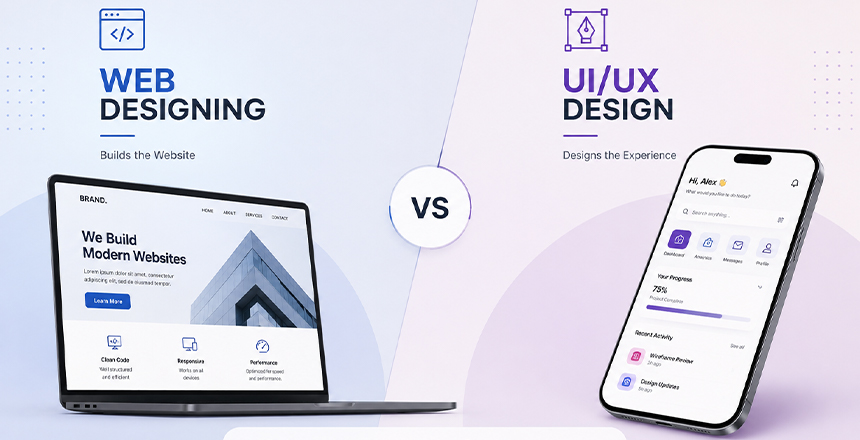
Choosing the right career has become one of the biggest challenges for students today. Honestly, it’s not as simple as it used to be. Every student wants a career that feels creative , has a decent salary package, includes job security , and still leaves room for future growth. In 2026 , two career options are getting a lot of attention, Web Designing and UI/UX Design, and people are talking about them everywhere . Both areas are creative in their own way, both are tied to technology, and yes both can bring excellent employment opportunities. But the real question most students end up asking is— which one is actually better, web designing or UI/UX design?
If you search online, you’ll notice thousands of students looking for answers about web designing courses, UI/UX design courses, salary comparison, future scope, and job opportunities. The confusion is honestly pretty normal, even expected , because both careers sound kind of similar from the outside . But once you get how each industry actually works, the difference becomes very clear.
The digital space is growing kind of faster than ever before, and honestly every business seems to want a solid online presence right now. Usually companies need websites, mobile apps, eCommerce shopfronts, dashboards, and other digital platforms that feel nice to the eye but also deliver a smooth user experience. That is really why the need for web designers along with UI/UX designers keeps rising quickly in 2026, because the market is moving, and users expect more all the time.
But before choosing one field, it is important to understand what both careers actually involve and which one matches your personality, skills, and future goals.
Understanding Web Designing in 2026
Web designing is mostly about making websites that look visually pleasing, professional, and work smoothly on all devices. Like, a web designer kinda focuses on the whole vibe, or the overall presentation of a site, not just one tiny thing. They deal with colors, typography, and those page layouts, plus banners and different sections. Also they make sure the responsiveness feels right, and the design structure comes together in a clean way, so everything seems coordinated and not random.
When you open a modern site and right away feel impressed by how it looks and layout, honestly that is usually the result of a web designer, not some random thing. Businesses today seem to understand that a weak, messy website can really cut down trust, and push customers away. So because of that, companies keep looking for capable web designers who can craft a current, professional web presence, that sort of thing.
A student who joins a web designing course usually gets into technologies and tools like HTML, CSS, JavaScript, WordPress, responsive design, Bootstrap, and the general UI principles. Compared to more traditional careers, web designing can make it so you build real projects rather quickly, so it helps them start freelancing, or maybe get professional work in a shorter time.
One of the biggest reasons students are picking web design as a career in 2026 is flexibility, like honestly. A web designer can work inside a company, join an agency, do remote work, or even start freelancing from home. A lot of students right now are earning money through freelance web design jobs while they are still studying.
The demand for web designers has really gone up , especially since small businesses, startups, influencers and local brands are all needing websites now. Like, whether it is a restaurant, a clothing brand, a digital marketing agency , a coaching institute, or an online store, every business really needs a site in order to expand online. And yeah, that has opened big chances in the web designing field, like all of a sudden there is work everywhere.
Another reason students tend to lean toward web designing is that the learning curve feels a lot more manageable ,especially for beginners. People who are curious about creativity and, I guess, simple coding often view web designing as exciting and really hands-on.
What Makes UI/UX Design Different?
While web designing mainly talks about the look and feel of websites, the UI/UX design side is more about the whole user experience, kind of from start to finish . This area is more deeply tied to grasping human behavior, user psychology , and how people interact digitally, not just what things “look right”. UI stands for User Interface, meaning the visual components that users actually touch on websites and apps. UX stands for User Experience, and it is about how users feel while using a product, like the whole flow, from navigation to comfort.
For example, picture opening a mobile app that looks beautiful, yet it feels kinda confusing to use right away. you cannot spot the buttons easily, moving around feels strange or difficult, and the whole experience turns frustrating pretty fast. This is where UI/UX designers come in, even if it sounds simple. A UI/UX designer makes sure that digital products are kept uncomplicated, user-friendly , fluid, and appealing. Their aim isn’t just to get the design looking attractive, it’s also to ensure everything works well and stays comfortable for real users.
In 2026, businesses are paying huge attention to user experience, because the competition in the digital market has become super high, you know. Companies now get that a better user experience improves customer satisfaction, boosts engagement, and also raises sales, pretty directly. Because of this, the demand for UI/UX designers is growing really fast.
Students who join a UI/UX design course usually end up studying tools and ideas like Figma, Adobe XD, wire framing, prototyping, user research, user journey mapping, design systems, mobile app design, and interaction design. Sometimes they also focus on the smaller details like how people actually behave, so the interfaces feel natural, not just “pretty”.
Compared to web designing, UI/UX design is seen as a bit more advanced, because it needs research and some real problem solving, plus creativity, and you have to actually understand how users behave. But at the same time, it’s also among the highest paying creative careers in today’s digital space, so it kinda makes sense why people care about it.
These days, many companies are actively looking to hire UI/UX designers for mobile apps, SaaS products, eCommerce platforms, fintech applications, healthcare platforms and even AI based software products. That’s one of the biggest reasons why searches about UI/UX designer salary and the future of UI/UX design are increasing so fast.
Which Career Has Better Scope in 2026?
Both careers have strong future potential, but the opportunities are slightly different.
Web design keeps being one of those really important skills, because websites are basically a must for businesses. Without a site, brands can’t quite build trust online, like people just don't feel it. And since more businesses are going digital day after day, that need for web designers is also rising, steadily, in fact.
Web design keeps being one of those kinda really important skills, because websites are basically a must have for businesses. Without a site, brands can’t build that trust online, like people just don't feel it, you know. And since more businesses are going digital day after day, that need for web designers is also climbing, pretty steadily in fact.
If we look at future growth, UI/UX design kinda has a small edge in current industry demand, because companies are putting customer experience first more than ever. Still, web designing remains a solid career choice too, particularly for students who actually like designing pages and getting deeper into front end development.
The best part is that both fields are connected. Many successful professionals today combine web designing and UI/UX skills together, which gives them a huge advantage in the job market.
Salary Comparison Between Web Designers and UI/UX Designers
Salary is another major factor students consider before choosing a career.
In 2026, beginner web designers can pull in a decent starting salary, especially if they have solid portfolios and hands-on practical skills. At the same time, freelancing gigs are broadly available for web designing, so that helps too. However, UI/UX designers usually end up getting higher salary packages, since companies see user experience as a pretty critical business element. And if you’re a skilled UI/UX designer in a product based company, a startup, or a tech firm, you can reach impressive salaries even after just a few years of experience.
But salary should never be the only deciding factor. Your interest, creativity, and learning style matter much more in the long run.
Which Career Is Better for You?
If you enjoy website layouts, creativity, visual design, and basic coding, then web designing can be a great career choice for you.
If you are interested in understanding user behavior, solving problems, designing mobile apps, and improving digital experiences, then UI/UX design can be a better option.
The reality is that there is no “wrong” choice between these two careers. Both industries are growing, both have strong future scope, and both provide excellent opportunities in 2026.
The most important thing is learning practical skills, building real projects, and continuously improving your creativity and knowledge. Students who focus on practical learning and industry skills always stay ahead in the digital industry.
Final Thoughts
Technology and digital businesses are moving fast, like really fast, and honestly creative careers feel more valuable every year. Web designing and UI/UX design are not just “nice to have” skills anymore, they are turning into strong career openings for students who want to craft a solid future in the online world.
In 2026, companies are not just hunting for degrees , they want people who can help build those more polished digital experiences, and yeah modern websites too, plus user friendly products. That’s basically why web designing and UI UX design have turned into, sort of, some of the most searched and demanded career tracks right now.
Instead of following trends blindly, students should choose the field that genuinely matches their interests and strengths. A career becomes successful when passion and skills work together.
Whether you choose web designing or UI/UX design, one thing is certain — the digital industry is full of opportunities for skilled and creative professionals.